|
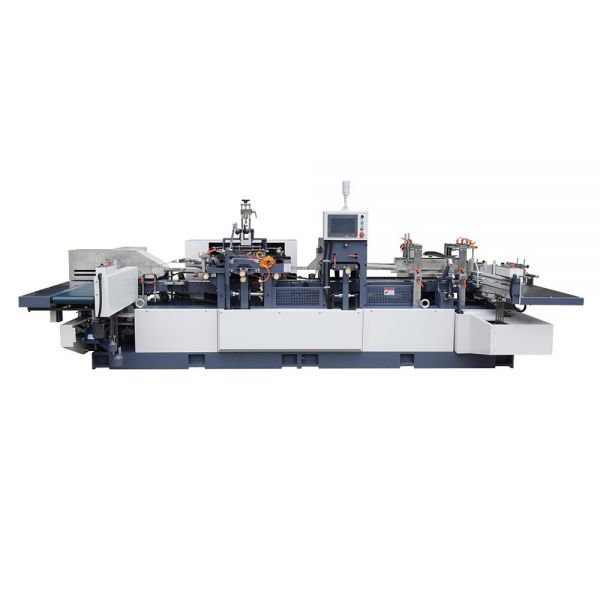
In modern bookbinding, the final appearance of a book is determined not only by the quality of its pages but by the perfection of its cover. For trade paperbacks, art books, and premium publications, the book flap (or “French fold”) is a hallmark of elegance and durability. Folding the cover edges neatly around the book block while trimming the front edge and creasing the spine requires a dedicated, high‑performance solution. Introducing the High Speed Book Flapping Machine – a purpose‑built system that integrates three critical post‑press operations into one seamless, high‑speed workflow. With a top speed of 4,200 pieces per hour, a reliable Schneider control system, and the ability to connect directly with a perfect binding line, this machine is engineered for binderies that demand both quality and throughput. As a world‑leading manufacturer of book flapping (creasing and folding) equipment, we take pride in delivering technology that sets new benchmarks for efficiency and reliability.
Why a Dedicated Book Flapping Machine?Traditional cover finishing often involves separate steps: trimming the book block’s front edge, then manually or semi‑automatically creasing and folding the cover flaps. This fragmented process creates bottlenecks, alignment errors, and increased labor costs. A dedicated book flapping machine eliminates these problems by completing all three procedures in a single, automated cycle. The High Speed Book Flapping Machine is specifically designed for book cover binding finish. It performs: Book block front cutting – precise trimming of the fore‑edge to create a clean, uniform face. Book cover creasing – accurate scoring of the cover to ensure smooth, crack‑free folding. Folding – forming the flaps (leaves) that wrap around the book block, creating the classic “flapped” cover.
All operations are synchronized in one continuous process, dramatically reducing handling time and improving consistency.
Blazing Speed Without Compromising QualityWith a maximum production speed of 4,200 pieces per hour, the High Speed Book Flapping Machine is one of the fastest in its class. At this rate, a bindery can process more than one book per second, making it ideal for large‑volume publishers and contract binders. Yet speed is meaningless without precision. The machine maintains consistent registration even at top speeds, thanks to its robust mechanical construction and advanced servo‑driven movements. Every book block is cut to the exact same length, every crease is applied with identical pressure and depth, and every flap is folded squarely. This repeatability eliminates waste and rework, directly improving your bottom line. 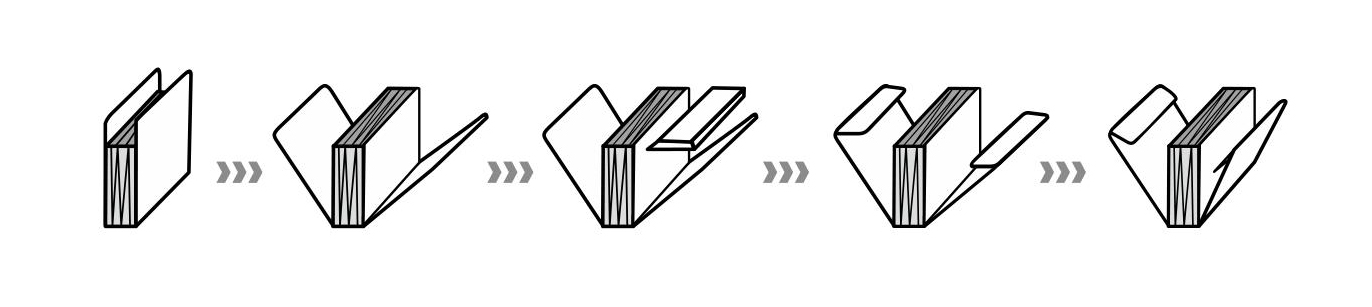
Three Core Processes – Engineered for Perfection1. Book Block Front CuttingBefore the cover can be folded around the book block, the front edge (fore‑edge) must be trimmed to a smooth, straight finish. The machine integrates a high‑precision rotary or guillotine cutting unit that shears the book block cleanly. Unlike manual trimming, which can leave rough edges or uneven cuts, the automated cutting cycle ensures a perfectly flush surface. The cutting parameters (depth, speed) are adjustable via the Schneider touch screen, allowing quick changeovers between different book sizes. 2. Book Cover CreasingA clean crease is essential for two reasons: it allows the cover to fold without cracking (especially important for laminated or thick paper covers), and it creates a defined hinge that makes the book easier to open. The machine’s dual‑wheel creasing system applies a precise score line on the cover at the exact distance from the spine. The creasing pressure and depth are finely controllable, preventing damage to the cover’s print or coating. For books with flaps, an additional crease may be applied to ensure the flap folds back neatly. 3. Folding – Forming the FlapsThe final operation is folding the cover flaps inward to wrap around the trimmed book block. The machine uses a pneumatic or servo‑driven folding mechanism that turns the flap at high speed without wrinkling or skewing. The folding angle (typically 90° or 180°) can be adjusted depending on the book design. The result is a professional, tight flap that stays flat and protects the book’s edges. All three stations are mechanically linked and timed, so a book block and its cover travel through the machine in perfect registration. The operator only needs to load the materials and monitor the process; the machine does the rest.
Schneider Control System – The Brain Behind the BrawnReliability in high‑speed production depends on a robust control system. The High Speed Book Flapping Machine is equipped with a Schneider Electric control platform – a globally recognized brand known for industrial stability and user‑friendliness. The Schneider system offers: Intuitive touch screen interface – operators can store hundreds of job recipes (book size, crease position, cutting length, speed). Changeover between different titles takes less than two minutes. Real‑time diagnostics – the system monitors sensors, motor currents, and cycle times. If a misfeed or jam occurs, the machine stops instantly and displays the exact location, reducing troubleshooting time. Remote service capability – with a network connection (optional), our support team can access the controller to fine‑tune parameters or diagnose issues, minimizing downtime. Consistent performance – closed‑loop servo control ensures that cutting, creasing, and folding positions repeat within ±0.2 mm, even after years of operation.
The combination of high‑speed mechanics and reliable Schneider electronics gives binderies confidence to run the machine continuously on two or three shifts. 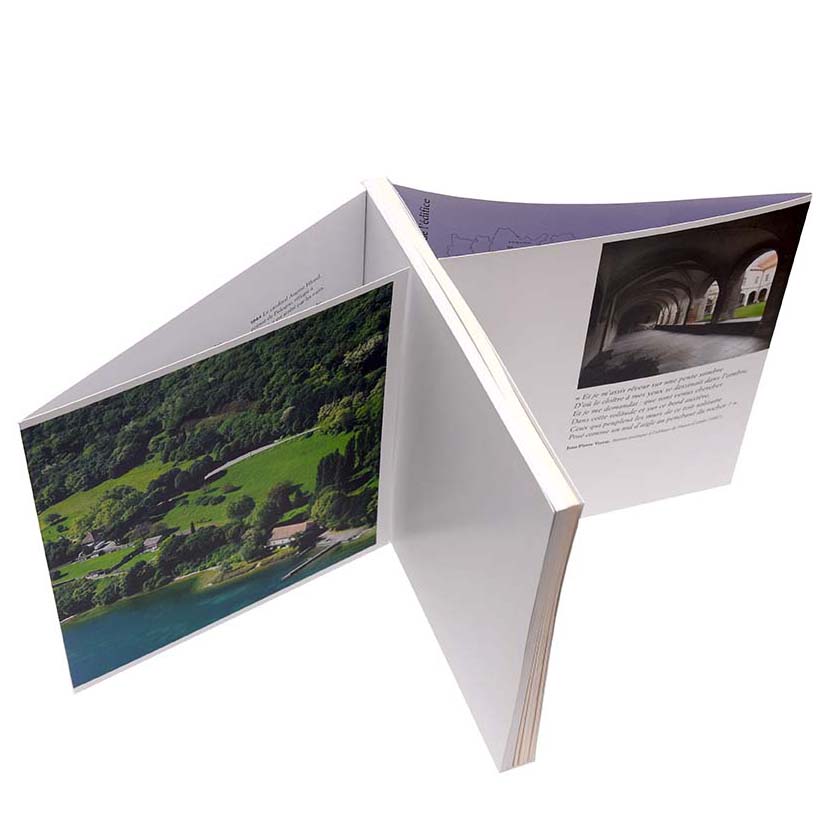
Seamless Integration with Perfect Binding LinesA key differentiator of this machine is its ability to be connected directly with a perfect binding line. Traditionally, book blocks come off the perfect binder (or three‑knife trimmer) and are stacked, then manually fed into a separate flapping machine. This interstage handling costs time, labor, and invites damage. Our High Speed Book Flapping Machine can be placed inline with your existing perfect binding line. As bound books exit the binder’s delivery conveyor, they are automatically transferred into the flapping machine’s infeed. The machine then performs front cutting, cover creasing, and folding without any manual intervention. The finished books – with flaps neatly folded – are delivered onto a stacker or conveyor ready for packaging. Inline integration benefits: Eliminates intermediate stacking and unstacking – reduces labor by up to 50%. Prevents mix‑ups – books are processed one after another in order, avoiding mismatched covers. Shortens lead times – from raw book block to finished flapped book in a single pass. Saves floor space – no need for buffer zones or additional handling stations.
For binderies running high‑volume perfect‑bound books with flaps (e.g., travel guides, cookbooks, literary paperbacks), this inline solution is a game‑changer. 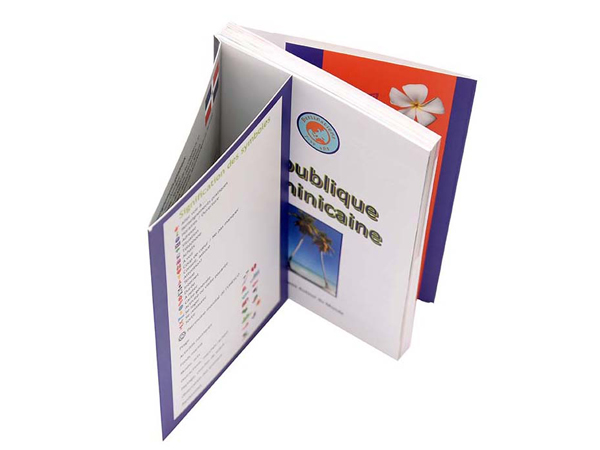
Built by a World‑Leading Book Flapping Machine ManufacturerWe are not just another machinery supplier. Our company has spent decades specializing in post‑press creasing, folding, and flapping technology. As a world‑leading manufacturer of book flapping machines, we have supplied equipment to some of the largest printers and binderies across North America, Europe, Asia, and the Middle East. Our leadership is built on: Continuous R&D – We invest heavily in improving cutting accuracy, folding speed, and ease of maintenance. The current High Speed model is the result of five generations of design optimization. Rigorous quality control – Every machine is assembled in our ISO‑9001 certified factory and tested for 48 hours at full speed before shipment. Global service network – We maintain trained engineers and spare parts warehouses in key regions, so help is never far away. Customer‑driven features – The inline interface, quick changeover, and Schneider controller were all developed in response to direct feedback from bindery managers like you.
When you choose our High Speed Book Flapping Machine, you are choosing a partner committed to your productivity and profitability.
|